“V. Penelope Pelizzon’s magnificent poems are epyllions, ‘little epics,’ that synthesize a stunning breadth of experience. Their geographical circuit—from Brooklyn to Africa to the Middle East—provides the backdrop for candid meditations on time and mortality, agency and accident. Like Elizabeth Bishop, that other consummate traveler, Pelizzon riffs on ‘assurance / of ruin’s recurrence’: Awful but cheerful.” — Ange Mlinko, author of Distant Mandate
“This is a brilliant book. I love its variety of forms and music, its humor and intellectual seriousness (how often does one actually learn things from poems?), its high-spirited embrace of life. This is a book I will keep close over the years.” — Christian Wiman, author of Zero at the Bone: Fifty Entries against Despair
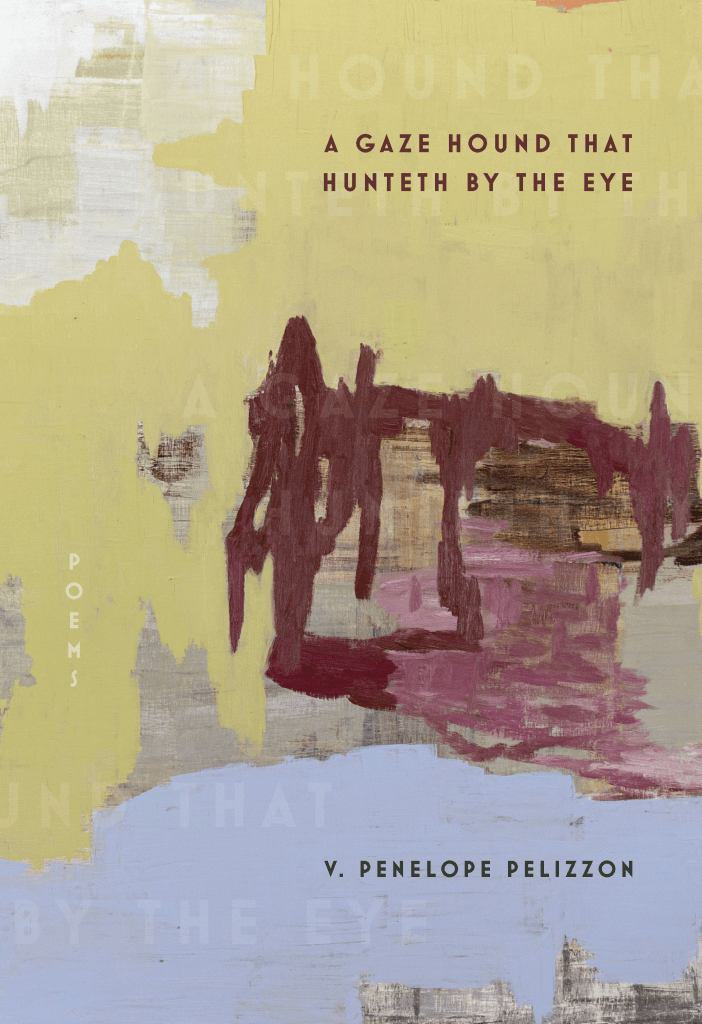
“Elegies, romances, eco grief, comedies, recipes, histories, and keen instruction: these poems hold the world in their lines. V. Penelope Pelizzon is a poet like no other, straddling centuries and continents with every brilliant line.” — Camille T. Dungy, author of Trophic Cascade
“‘What a curator the mind is,’ writes Pelizzon of her ‘scrappy cabinets of curiosities,’ these poems that feel inlaid with acacia, ivory, and swarms of silver bees and wrapped in rarest silks, redolent of spice and tea and good old human sweat. I dazzled at the music and utter brilliance of this collection.” — D. A. Powell, author of Repast: Tea, Lunch, Cocktails
“Like Tennyson’s Ulysses, V. Penelope Pelizzon is a part of all that she has met. With inexhaustible interest in the world and in the Aristotelian activity of living, she is a permanent student of people and other complex systems—cultures and landscapes, nations, economies, and empires, families, a garden, her dog, herself—and of how they are conceived, brought to term, nurtured, and mourned for. Pelizzon has the impartial eye of a naturalist and the pliant mind of a philosophical pragmatist but venerates words and word sounds and the figurative imagination like a true neo-Romantic. The result is an original, perspective-altering poetic sensibility that can be devastating, funny, hopeful, absurd, or attuned to the surprising harmonies of real experience.” — Joshua Mehigan, author of Accepting the Disaster
Order from the Pitt Poetry Series Order from Bookshop.org Order from Amazon
 From the coal country of Western Pennsylvania, to Camorra-ridden Naples, to the streets of Damascus before the outbreak of civil war, the lyric poems in this collection chart the complexities of national and intimate identity. By turns playful, lamenting, skeptical, bawdy, and aggrieved, they find the human fingerprint below history’s erasures, ultimately praising the endurance of the soul “so ample that, if that is all there is,/ she makes a feast of thorns.”
“With immense poetic verve, Pelizzon finds flamboyance in places where it has been forgotten and brings it back to vivid life — and she sees it for what it is. Her vision is then both passionate and dispassionate at the same time, a maturity of perspective that is just one of the many accomplishments of this superb first book.” — Andrew Hudgins, Hollis Summers Prize judge
“Everything about [Nostos] points to a seasoned, mature voice, a sense of craft that is stunning in its expertise. Beginning with the first poem, the reader is consistently challenged on an intellectual and emotional level – and consistently satisfied with the ambitious breadth and depth of these wonderful poems.” – Jan Beatty, The Pittsburgh Post-Gazette
Order from Ohio University Press Order from Amazon
 “How is it that tabloids still seem trashy while crime films like The Public Enemy and Double Indemnity look artier by the year? Pelizzon and West have tackled this and other stubborn intermedial questions by examining tabloid reporting and Hollywood crime films side by side. Their ingenious approach, the diligence of their historical and textual research, and their coinage of narrative mobility to frame the process by which American cinema and other media appropriated sensationalist journalism in the 1920s and 1930s (and beyond) will prove invaluable to critics and theorists wishing to address intermedia adaptation without slighting the political questions of class and taste.”
—Paul Young, English and Film Studies, Vanderbilt University
Order from Ohio State University Press Order from Amazon
 V. Penelope Pelizzon